
Left or right? The question comes up at the latest when a new watch goes on your wrist or a smartwatch joins the collection. This guide shows where the habit comes from, when the right arm is the better choice and what matters for a good fit.
The key points in brief: Right-handed people usually wear their watch on the left, left-handed people often on the right. This keeps the hand you write and grip with free, and the watch sits on the arm that bumps into things less in everyday life. There is no fixed rule.
- Right-handed: left. The crown can then be operated comfortably with the right hand.
- Left-handed: often right, for the same reason. Some stick with the left in order to operate the watch like right-handed people do.
- Smartwatch: fits on either arm. With the Apple Watch, you change the wrist setting in the settings after switching.
- Fit: not too tight and not too loose. If the length or lug width does not fit, a different strap provides the right fit.
Why do most people wear their wristwatch on the left? Most people wear their wristwatch on the left because the majority of the population is right-handed. The left wrist is more comfortable for right-handed people, as the dominant hand stays free for other activities. Watches are often designed for the left wrist, with a crown and controls that are easy to reach. In addition, a watch on the less-used arm tends to be damaged less and stays functional for longer. The same applies to left-handed people, who often wear their watch on the right so as not to hinder their dominant hand.
Is it more comfortable for right-handed people to wear the watch on the left arm?
For right-handed people it makes more ergonomic sense to wear the watch on the left arm. Since the right hand is dominant and used more often, the left hand stays free for wearing the watch. On top of that, this makes the watch easier to operate with the dominant right hand, especially on models with the crown on the right side. The crown is therefore easy to reach, which in turn makes winding and setting the watch easier.
Does wearing it on the left arm protect the watch better?
Of course, you can wear your watch on whichever arm suits you better. However, as a right-handed person, wearing the watch on the left arm offers better protection, because the left hand is less active in everyday life. This reduces the likelihood of the watch being exposed to knocks and scratches.
This is especially important for valuable models and collector's pieces, in order to preserve the longevity and appearance of the watch. For right-handed people, wearing the watch on the left arm has advantages in many everyday situations, such as the following:
- Writing
- Typing on the keyboard
- Manual work
- Sports activities
- Driving
- Cooking
- Using tools
- Painting or drawing
- Playing music (e.g. playing the guitar)
- Gardening
What other practical advantages are there?
Reading the watch is more natural on the left arm for right-handed people, as they can simply read the time without using the dominant hand. This is particularly practical in everyday life, as the freedom of movement of the right hand is not restricted. Further advantages are that the left hand comes into less contact with surfaces, which reduces the risk of scratches. In addition, the right hand remains fully available for precise tasks such as writing or operating tools.

How did the tradition of wearing watches on the left arm develop?
The tradition of wearing watches on the left arm can be traced far back in history – it even began before wristwatches were widespread, with pocket watches. These were usually carried in the left waistcoat pocket, so that the right hand was free. That watches are worn on the right therefore has no particular meaning. Nor does wearing the watch on the left have anything to do with psychology.
When wristwatches became popular in the early 20th century, many people simply adopted this habit. The left hand was less active and therefore better suited to wearing the watch and protecting it from damage. Different preferences developed in different cultures and regions, but the left side remained the most popular choice worldwide – especially among right-handed people.
What role do cultural norms and expectations play?
Above all, the role of habit. How stable it is is shown by an international survey of 300 people on wearables: most wore their smartwatch on the wrist of the non-dominant hand, so as a rule on the left, across all ages and genders.
In addition, fashion designers often design their fashion and watchmakers their wristwatches in such a way that they simply fit the left arm better, both visually and functionally.
Are there reasons why some people wear their watch on the right arm?
Many left-handed people wear their watch on the right arm, as this keeps their dominant left hand free. This not only makes use easier, but also protects the watch from damage during everyday activities – just like wearing the watch on the left arm does for right-handed people. Some people also prefer to wear the watch on the right arm for aesthetic reasons – for example if they simply find it more stylish or if the design of the watch or watch strap suits the right hand better. The perfect wristwatch style is ultimately entirely subjective.
Professional reasons can also play a role – as with people who work in jobs where the left hand is heavily used, for example musicians or craftspeople. There are also individual preferences and habits that influence which arm the watch is worn on. Some athletes wear their watch on the right arm so as not to impair movements or because they find it more comfortable during training.
What role does personal comfort play?
Ultimately, the choice of arm for wearing a watch depends strongly on personal comfort and preference. Every person has individual habits and comfort needs that can influence their decision.
While most people wear their watch on the left arm, some simply feel more comfortable placing the watch on the right arm. This can be due to specific activities, hand habits or even the fit of the watch. Some find operating the watch on the right arm more intuitive, especially if they are left-handed or have certain professional requirements.
There are no strict rules for wearing a watch, and it is important that you find the option that is most comfortable for you. Try wearing your watch on both wrists and analyse which way of wearing it is best suited to your daily life and activities. Sometimes switching wrists can make a big difference to wearing comfort.
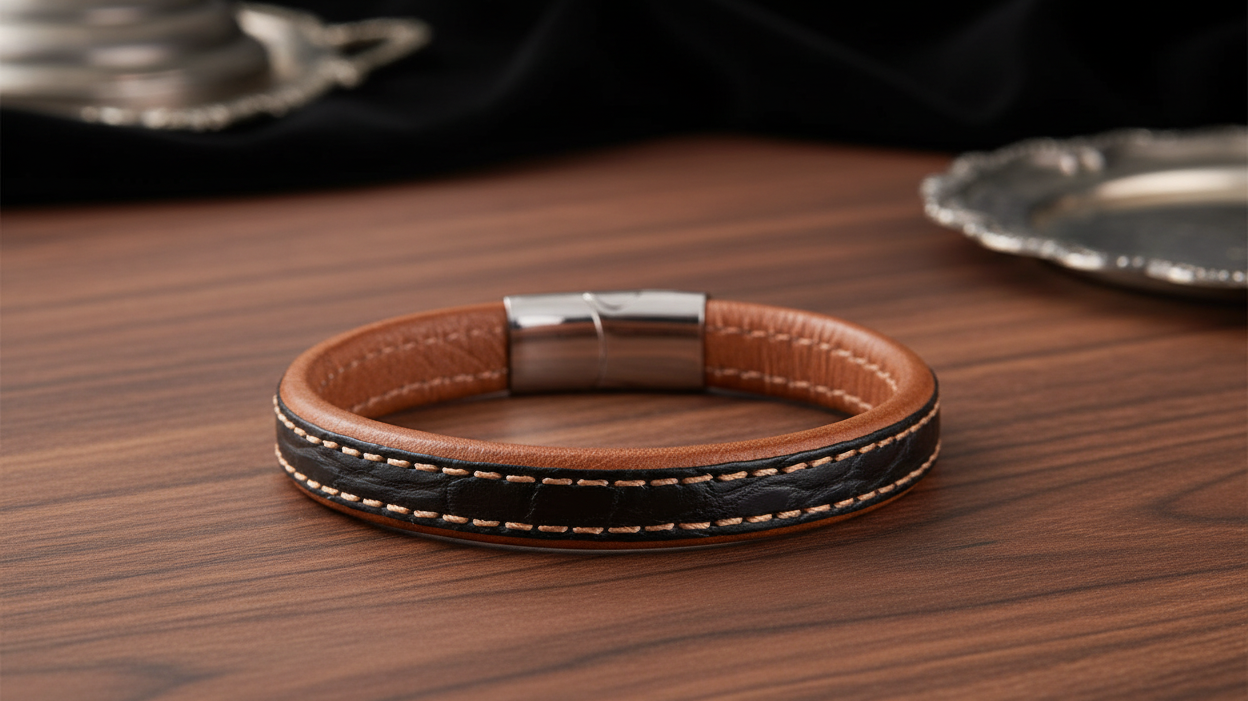
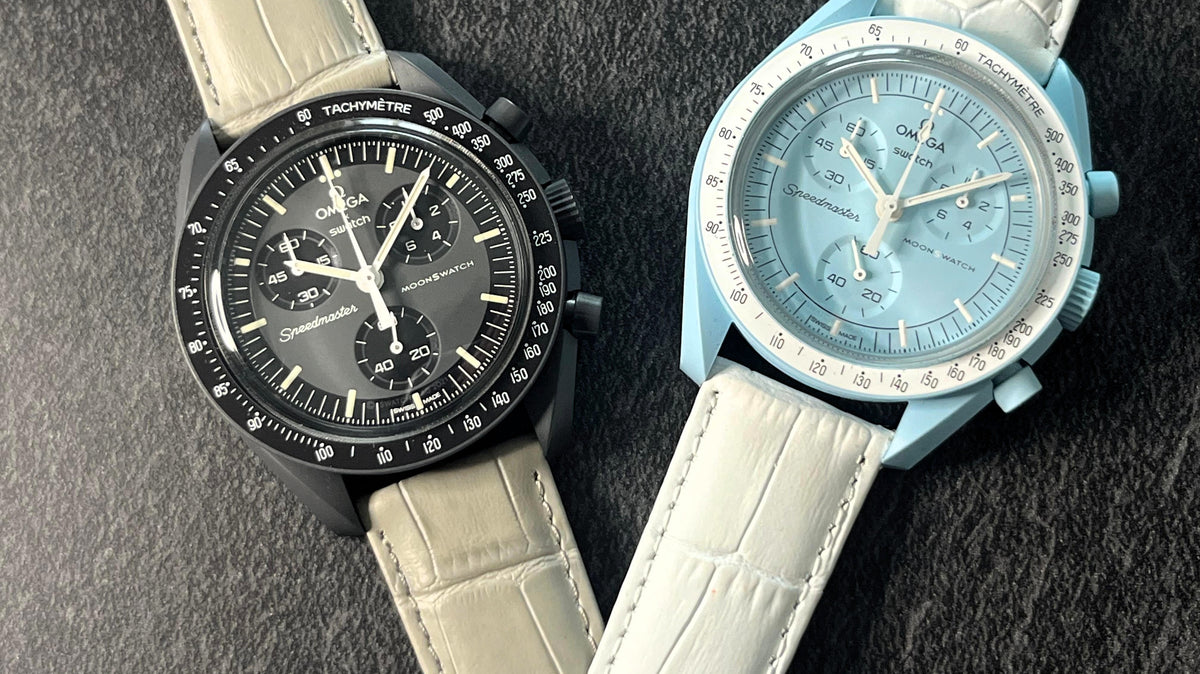
If you switch arms with a smartwatch, a setting is part of it: on the Apple Watch, you change the wrist under "General" › "Orientation" so that the display wakes up when you raise your arm (Apple's instructions). On the new wrist, the watch should not sit too tight or too loose. For the Apple Watch, Apple recommends wearing it above the wrist bone. If the strap no longer fits well on the other arm, it is a good opportunity for a new look, for example with one of our leather straps. Which length and lug width you need is shown in our guide measuring watch strap dimensions correctly.
By the way: the question "Where do women wear their watch and where do men wear their watch?" is easy to answer. There is no difference here.
Conclusion: Why do most people wear their wristwatches on the left?
Most people wear their wristwatches on the left because the majority of the population is right-handed. For right-handed people, the left hand is less active, so the watch stays better protected. Historically, this habit was carried over from pocket watches to wristwatches. Cultural norms and personal preferences also play a role.
In future, the trend could of course change through technological innovations and changing fashion preferences – after all, nothing lasts forever. No matter which arm you wear your watch on: with a new strap you give it a different look. You will find ideas for this in our leather straps or plastic straps.
FAQ: Frequently asked questions
Why do most people wear their watch on the left wrist?
Most people wear their watch on the left because the majority of the world's population is right-handed. The right hand therefore stays free for activities and the watch tends to be damaged less. In addition, many watches are designed for the left wrist.
Is it okay to wear the watch on the right wrist?
Yes, in most countries it is perfectly fine to wear the watch on the right wrist. This is often more comfortable for left-handed people or for people who need their dominant hand for precise tasks.
Why do left-handed people often wear their watch on the left too?
Some left-handed people wear their watch on the left in order to operate it like right-handed people do, while others wear it on the right to keep the dominant hand free. Ultimately, it depends on personal preference.
Which types of watches are designed for the left wrist?
Most watches, especially those with a crown on the right side, are designed for the left wrist. This allows easy operation with the right hand.
Does the type of watch strap affect how the watch is worn?
Yes, the type of watch strap can affect how the watch is worn. Leather and rubber straps offer flexibility and comfort, while metal bracelets are often heavier.